Every construction site carries the potential for hazards — conditions with the capability to cause an incident, whether that’s an injury, an illness, property damage, or even a “good catch” near miss that reminds us how close we came. Understanding what a hazard is can be the easy part. The real challenge, and where most safety programs are tested, is to recognize hazards in the field and control them before anyone is exposed. Hazards on a job site take many forms — airborne particles and fumes, chemical exposure, ergonomic strain, physical dangers like noise, vibration, or struck-by risks, and even the mental and emotional toll of the work. Recognizing this range is the foundation for building a jobsite where hazards don’t go unnoticed or unaddressed.
Identifying hazards effectively starts with a proactive mindset rather than a reactive one. The Job Safety Analysis (JSA) is one of the most valuable tools available for this — it pushes crews to think through and list the hazards tied to each job function before work begins, with extra attention paid to the more critical tasks and areas. But a JSA is only as good as how it’s used: it has to be reviewed with every worker on the crew and communicated in a way they actually understand, not just signed and filed. Having project managers, safety personnel, and superintendents walk the job beforehand, and holding pre-task meetings for higher-risk work, allows the team to spot hazards and plan corrective measures before anyone steps into harm’s way. For employees who are new to a task or to the company, pairing them with a more experienced, knowledgeable coworker for peer inspections and audits is one of the most effective ways to build that recognition skill — and it’s a practice that should extend to reviewing the JSA and getting briefed by the superintendent any time someone arrives after the start of a shift.
Identifying a hazard is only half the job — controlling it is what actually protects people. Hazard controls fall into two broad categories: proactive and reactive. Proactive controls — things like inspections, careful hiring and screening, monitoring behavior and performance, training, and pre-job planning — happen before exposure occurs, and while they take more time up front, they build a genuinely healthy safety culture and can meaningfully cut down the number of incidents that ever take place. The Hierarchy of Controls is the standard framework for this: it ranks control methods by effectiveness, though in practice the most effective option isn’t always feasible for a given task, which is why judgment and planning matter as much as the framework itself. Reactive methods — incident reporting, investigation, trend identification — come into play after something has already gone wrong. Even with strong proactive measures in place, human error means incidents can still happen; when they do, handling them well and learning from them is what keeps a similar failure from repeating.
Controlling hazards isn’t purely procedural — it’s cultural, and that culture is set by the people leading the work every day. Encouraging open dialogue with the crew about safe practices, quality work, and pride in the job makes it far easier for workers to genuinely buy into safety rather than just going through the motions. Superintendents and field leaders are often close with the people they supervise, which means what they say and do carries real weight — leading by example isn’t just a phrase, it’s the mechanism by which safety standards actually get set on a job. Whatever a crew tolerates becomes the standard. If PPE goes unworn, if safety issues or near misses get brushed aside, or if leadership simply stops caring out loud, workers pick up on that and treat it as acceptable. Those small, everyday choices accumulate — and they ultimately shape how well a company performs and how safely its people go home.
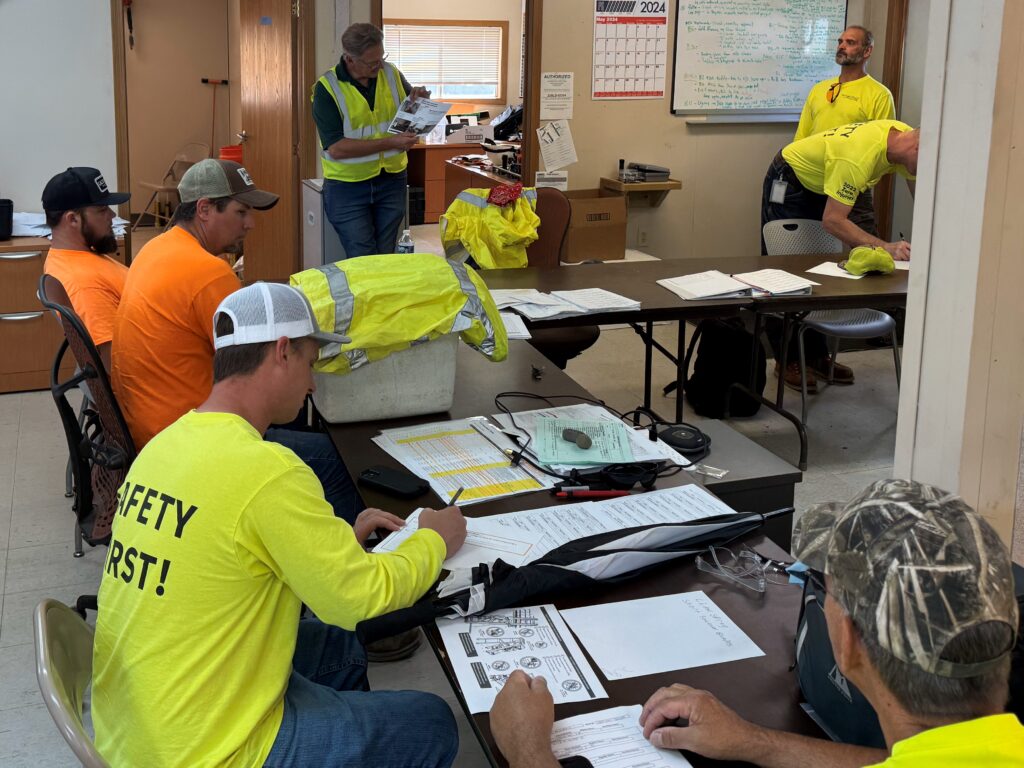
That’s exactly why training new employees matters so much from day one. Someone brand new to the company doesn’t yet know what “normal” looks like on this jobsite, which means they’ll take their cues from what they see tolerated and modeled around them. Structured training — reviewing federal and company safety requirements, running hands-on hazard-identification exercises in realistic conditions, and pairing new hires with experienced workers for peer inspections — gives them the tools to recognize hazards rather than walk past them. But just as importantly, it signals from the outset that safety isn’t a box to check; it’s the standard the company actually operates by. Instilling that proactive safety culture early, rather than hoping it develops on its own, is one of the most effective long-term investments a company can make in protecting its people and its projects.